
VVZ ERP Suite for farming businesses.
A lightweight local workflow for farms, small agricultural businesses, producers, livestock operations, market gardeners and direct-sale farms.
Typical requests
The configuration is adjusted to the farm’s products, services, request forms and working rules.
Product enquiries
The request can include the product or service, customer contact details, quantity or comments, preferred pickup or delivery option and requested date.
Direct-sale orders
The request can capture customer details, selected products, pickup point or delivery area, requested date and notes for follow-up.
Seasonal work requests
The request can describe seasonal work, visit details, location, preferred timing and comments for local processing.
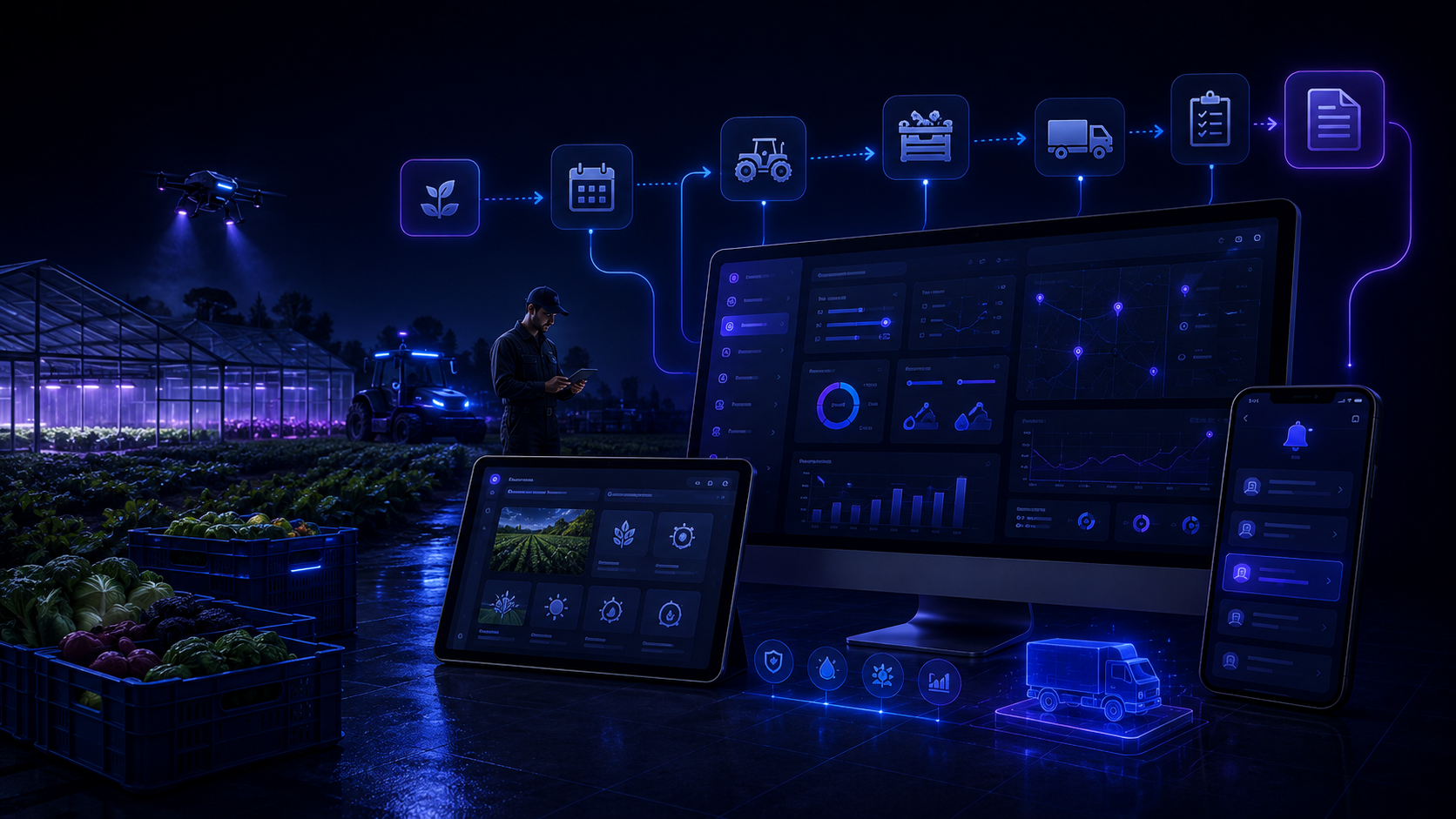
Workflow from request to journal
1) Customer form
The customer sends a product enquiry, order request or service request with the required details.
2) Server delivery queue
The server validates the request and places it in the queue for delivery to the farm.
3) Local application
The local application receives the request and stores the working record.
4) Telegram notification
The authorized person receives a notification and can confirm, cancel or later mark work completed when enabled.
5) Status tracking
Requests use working statuses: new, confirmed, completed and cancelled.
6) Journal and CSV
The local work journal keeps the operational record, and data can be exported manually to CSV.
Delivery options
Integration into an existing website
Connect request intake and server delivery to the current farm website after reviewing safe integration options.
Complete turnkey delivery
Prepare the website, server, local application, Telegram connection and selected farming workflow modules.
Specific module
Configure or extend a module when the standard engine needs a farm-specific addition.
Implementation stages
Workflow assessment
Review the real products, services, customer request data, statuses and installation conditions.
Engine configuration
Configure the ready engine, dictionaries, modules and working rules.
Full-chain test
Test the request path from website form to local processing, Telegram status action and CSV export.
Architecture and data control
Local primary data
Primary operational data and the work journal stay in the local application.
Minimum server data
The server stores only what is needed for request delivery and synchronization.
Telegram adapter
Telegram is a notification and authorized-action adapter, not the database.
Offline visibility
The local application must show connection state, last successful synchronization and pending queue.
Recovery behavior
Pending status updates and actions can resume after the connection returns.
Modules later
New modules can be added later without replacing the whole engine.
Boundaries
This page does not claim accounting, payroll, online payments, inventory management, IoT, machinery telemetry, crop prediction, AI, advanced analytics, regulated traceability certification, full agricultural ERP functionality or fixed prices and deadlines.
Pricing after workflow assessment
Scope and price are determined after reviewing the current workflow, existing website, required modules and installation conditions.